
Your cart is empty
Globalstar ST100 Simplex Modem
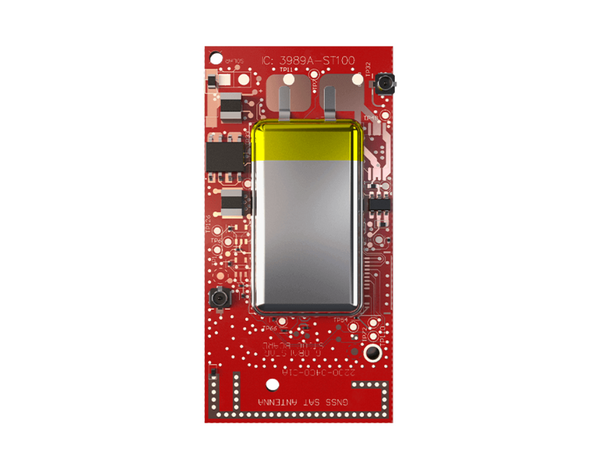
The Globalstar ST100 is a fully integrated simplex satellite modem designed to accelerate IoT product development where reliable one-way data transmission is required. Operating over the Globalstar low-earth-orbit satellite network, the ST100 enables compact devices to transmit short bursts of telemetry data from locations beyond cellular coverage.
The ST100 combines satellite transmission capability, GPS positioning, Bluetooth connectivity and flexible power options into a single module. This makes it particularly suitable for rapid integration into tracking, monitoring and security solutions without the complexity of designing a satellite RF subsystem from scratch.
Because it supports both battery and line power configurations, the ST100 can be deployed across a wide range of asset profiles, from mobile equipment and transport assets to fixed infrastructure installations. Developers benefit from simplified integration, reduced development time and proven satellite performance in remote environments.
Downloads
| Specification | Details |
|---|---|
| Connectivity | Serial connector and Bluetooth |
| Power Options | Battery, solar and line power configurations |
| Function | One-way simplex satellite data transmission |
| Network | Globalstar Satellite Network |
Globalstar STX-3 Simplex Modem
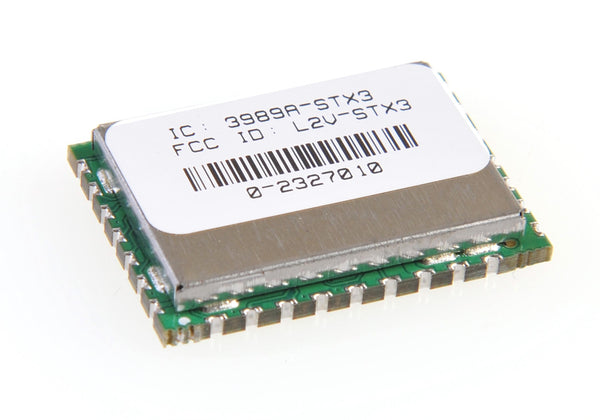
The Globalstar STX-3 is a surface-mount simplex satellite transmitter module engineered for OEM integration into custom hardware platforms. It is designed for manufacturers who require direct PCB-level integration of satellite connectivity within space-constrained IoT devices.
Unlike enclosed modem solutions, the STX-3 is a castellated, board-level module intended to be soldered directly onto a host PCB. Power management, antenna configuration and host processor control are implemented within the developer’s system architecture, allowing maximum flexibility in device design.
The STX-3 transmits small packets of user-defined data over the Globalstar satellite network. Messages are delivered to a configurable back-end interface, such as FTP, HTTP or email endpoints, enabling seamless integration with monitoring platforms and analytics systems.
Its compact footprint and modular certification streamline the regulatory process for end-device manufacturers, although final products must undergo Globalstar network approval prior to deployment.
Downloads
| Specification | Details |
|---|---|
| Size | 1130 mils x 810 mils (28.70mm x 20.57mm) |
| Thickness | 163 mils (4.13 mm) with components |
| Certification | FCC CFR Part 25, Industry Canada, CE |
| Technology | Operates over Globalstar Satellite Network |
| Data Flow | Outbound data delivered to FTP, HTTP host or email interface |
FAQs
What does “simplex” mean in these devices?
“Simplex” refers to one-way data transmission only. The ST100 and STX-3 transmit outbound data over the Globalstar satellite network but do not support inbound communication back to the device.
Are ST100 and STX-3 two-way devices?
No. Both modules are designed specifically for outbound data transmission. If your application requires two-way messaging, a duplex satellite solution would be required.
What network do they operate on?
Both devices operate over the Globalstar low-earth-orbit satellite network, providing near-global land coverage for telemetry and IoT data applications.
Can the devices transmit GPS location data?
The ST100 includes integrated GPS capability and can transmit coordinates within its data packets. The STX-3 does not include onboard GPS, so position data must be supplied by the host processor in your custom hardware design.
How is transmitted data delivered to my system?
Once received by the satellite network, data packets are routed to your configured backend endpoint. Delivery options typically include HTTP, FTP or email interfaces, allowing integration with monitoring platforms, analytics systems or custom cloud environments.
How do I power the ST100 and STX-3?
The ST100 supports battery, solar and line power configurations, making it suitable for both fixed and mobile deployments. The STX-3 is powered directly from your host PCB and requires proper power supply design within your hardware architecture.
What is the difference in integration between ST100 and STX-3?
The ST100 is a more integrated solution with onboard GPS, Bluetooth and flexible power handling, suited to faster IoT development cycles. The STX-3 is a surface-mount OEM module designed for direct PCB integration, requiring the host device to manage power, RF antenna routing and processor control.
Do these modules require airtime?
Yes. A Globalstar satellite subscription is required for data transmission. The appropriate airtime plan depends on your reporting frequency and data volume.
Does installation environment affect transmission reliability?
Yes. Successful transmission depends on clear line-of-sight to the sky. Heavy obstructions such as buildings, metal enclosures, dense foliage or steep terrain can reduce uplink success rates. Correct antenna placement is critical.
Are repeated transmissions recommended?
In some applications, repeating a data packet multiple times improves overall delivery probability due to the nature of low-earth-orbit satellite passes. Transmission strategy should be defined during system design.
Do products using the STX-3 require certification?
Yes. End products incorporating the STX-3 must undergo Globalstar network approval and meet applicable regulatory requirements before commercial deployment.