
Your cart is empty

Ocean Signal
As a global leader in water safety, Ocean Signal designs and manufactures advanced personal and vessel beacons, AIS devices, and distress signalers engineered to save lives at sea.
Marine Safety Technology Built for the Moments That Matter
When you’re out on the water, reliable safety equipment isn’t an optional extra. Ocean Signal develops advanced emergency beacons and marine safety technology designed to help alert rescuers, communicate your position and support a faster response when every second matters.
From compact Personal Locator Beacons to vessel-mounted EPIRBs and AIS Man Overboard devices, Ocean Signal combines satellite technology, accurate positioning and rugged marine-ready design to help keep sailors, crews and offshore professionals safer.
Designed to Get You Found
Ocean Signal specialises in technology designed for emergency situations.
Its range includes 406 MHz Personal Locator Beacons and EPIRBs that can communicate through the international Cospas-Sarsat Search and Rescue satellite network, alongside AIS-enabled devices capable of broadcasting an emergency position to nearby vessels.
The result is a range of compact safety equipment designed to give recreational and professional users an additional layer of protection when mobile coverage and conventional communication methods may no longer be available.

Emergency Protection You Can Carry With You
A Personal Locator Beacon, or PLB, is a compact emergency beacon designed to be carried by an individual.
When activated in a life-threatening emergency, compatible Ocean Signal PLBs transmit a 406 MHz distress signal through the global Cospas-Sarsat satellite network, helping Search and Rescue authorities identify both the beacon and its position.
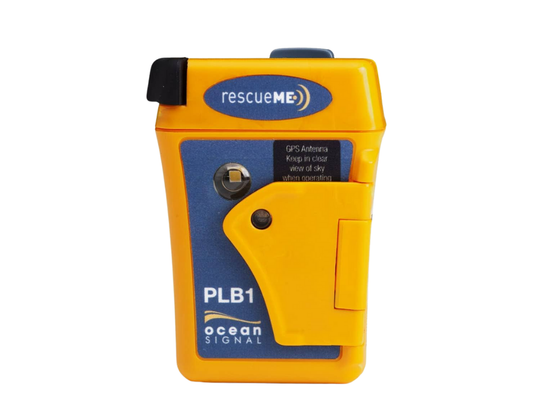
Ocean Signal's range includes the ultra-compact rescueME PLB1 and the advanced rescueME PLB3, which combines global 406 MHz alerting with AIS technology for an additional local layer of distress signalling.
Ideal for sailors, kayakers, anglers, offshore workers and anyone travelling beyond reliable terrestrial communications.

Essential Emergency Protection for Your Vessel
Emergency Position Indicating Radio Beacons, EPIRBs, are designed specifically for maritime emergencies.
Once activated, an EPIRB can transmit a vessel's distress alert and position through the global Search and Rescue satellite system, allowing the appropriate rescue authorities to begin coordinating a response.
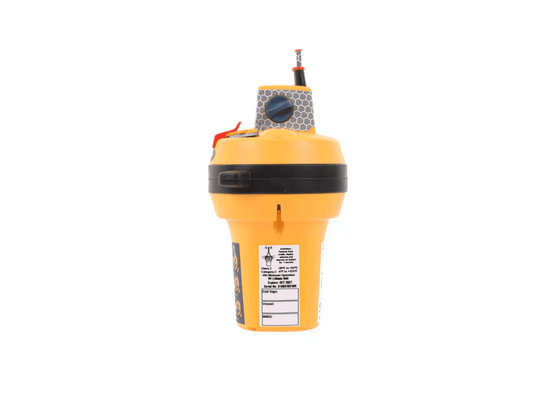
Advanced Ocean Signal models such as the rescueME EPIRB3 add technologies including AIS, Return Link Service and NFC connectivity, combining global distress alerting with additional tools designed to aid localisation, reassurance and device management.
Whether you're cruising, sailing offshore or operating commercially, an EPIRB can form a critical part of your vessel's emergency equipment.

Ocean Signal Hardware


Frequently Asked Questions
Although all three are designed to improve safety, they work in different ways. A Personal Locator Beacon (PLB) is carried by an individual and sends an emergency distress signal via satellite to Search and Rescue authorities. An EPIRB performs a similar function but is designed specifically for vessels.
An AIS Man Overboard (MOB) device, such as the Ocean Signal rescueME MOB2, alerts nearby compatible vessels to your position, helping them locate you quickly if you fall overboard. Unlike a satellite PLB or EPIRB, the MOB2 does not independently alert the global satellite Search and Rescue network.
No. Ocean Signal's 406 MHz PLBs and EPIRBs use the international Cospas-Sarsat satellite network, which does not require a monthly subscription or ongoing airtime charges.
Once purchased and correctly registered, your beacon is ready for emergency use, provided it remains serviceable and within its battery replacement date.
Yes. Ocean Signal's 406 MHz PLBs use the global Cospas-Sarsat satellite network, allowing them to transmit emergency distress alerts from remote locations, including offshore waters and areas without mobile phone coverage.
For the best performance, the beacon must be correctly activated and positioned with a clear view of the sky. Obstructions and environmental conditions can affect reception and positioning.
Yes. UK-coded 406 MHz PLBs and EPIRBs must be registered with the Maritime and Coastguard Agency's UK Beacon Registry.
Registration is free and allows rescue authorities to identify the beacon's owner, access emergency contact information and respond more effectively in an emergency. You can register online through the official UK government beacon registration service.
Remember to update your registration if your contact details, vessel information or beacon ownership changes.
Absolutely. Although Ocean Signal is well known for marine safety equipment, its rescueME PLB1 and PLB3 can also be used for activities on land, including hiking, mountaineering, remote exploration and other outdoor adventures.
Both provide satellite distress alerting independently of mobile networks, making them particularly useful when travelling beyond reliable phone coverage.
The rescueME PLB1 is a compact, straightforward personal emergency beacon providing global satellite distress alerting without a subscription.
The rescueME PLB3 offers additional functionality, including AIS alerts to nearby equipped vessels, Return Link Service (RLS), NFC smartphone connectivity and compatibility with certain inflatable lifejackets for semi-automatic activation.
If you simply need a reliable way to raise the alarm, the PLB1 is a strong choice. For sailing and marine activities where alerting nearby vessels is equally important, the PLB3 offers additional protection.
Yes, provided the chartplotter is connected to compatible AIS receiving equipment and is correctly configured.
When activated, an Ocean Signal rescueME MOB2 transmits an AIS distress message containing your position, allowing nearby compatible vessels to identify your location on their navigation displays. It also supports VHF DSC alerting, subject to equipment compatibility and applicable regulations.
Because older navigation equipment may handle MOB alerts differently, checking compatibility before purchase is recommended.
That depends on the EPIRB category.
Category 1 EPIRBs, such as the Ocean Signal safeSEA EPIRB3 Pro, are housed in an automatic-release bracket designed to release the beacon if a vessel sinks. Once released and in contact with water, the beacon can activate automatically.
Category 2 EPIRBs, such as the rescueME EPIRB3, must be manually removed from their bracket, after which water activation is possible. Both categories also offer manual activation.
Battery life depends on the model. The Ocean Signal rescueME PLB1 has a seven-year battery replacement interval, while the rescueME EPIRB1 has a ten-year interval.
These are replacement intervals rather than continuous operating times. In an emergency, the PLB1 is designed to transmit for at least 24 hours, while the EPIRB1 provides at least 48 hours under specified conditions.
Always check the expiry date on your individual beacon, as batteries must be replaced when due or following emergency activation.
Ocean Signal PLB and EPIRB batteries are not generally designed for user replacement. They should be replaced by an authorised service centre to ensure the device remains properly sealed and ready for emergency use.
Battery replacement is necessary when the expiry date is reached, following an emergency activation or when a test indicates that servicing is required.
When activated, a 406 MHz PLB or EPIRB transmits a distress alert to the Cospas-Sarsat satellite network. This alert is relayed to the appropriate Search and Rescue authorities, who can use the beacon's identification and location information to coordinate a response.
Compatible beacons also transmit a 121.5 MHz homing signal to assist rescue teams in locating you more precisely once they reach the area.
Return Link Service is a feature available on selected Ocean Signal beacons, including the rescueME PLB3 and EPIRB3.
It provides confirmation back to the beacon that your distress alert has been received and located by the satellite system and forwarded to the relevant authorities.
This additional reassurance can be invaluable in an emergency, although an RLS confirmation does not mean that a rescue team has already been dispatched.
Yes. Ocean Signal beacons include self-test functions that allow you to check key aspects of their operation without broadcasting a normal emergency distress alert.
The procedure and recommended testing frequency vary by model, so always follow the manufacturer's instructions. Some tests, particularly GPS tests, should be performed only at specified intervals to preserve battery capacity.
Generally, yes. Ocean Signal PLBs are designed with lithium batteries that meet applicable aviation safety requirements, and models such as the rescueME PLB1 can generally be carried in hand luggage or checked baggage under relevant passenger baggage rules.
However, airline policies and international aviation regulations can vary, so check with your airline before travelling. Always ensure the beacon is protected against accidental activation.
The Ocean Signal rescueME EDF1 provides a reusable alternative to traditional pyrotechnic flares, using high-intensity LED technology to make you more visible during an emergency.
Unlike conventional flares, it can operate for over six hours and doesn't produce flames, sparks or smoke. However, the EDF1 does not replace pyrotechnic flares where carriage of approved flares is legally required. It is best considered an additional visual signalling tool for your marine safety equipment.
This distinction is confirmed in Ocean Signal's own EDF1 instructions.