
Your cart is empty

Inmarsat
Inmarsat satellite solutions
Inmarsat provides global mobile satellite communications across voice, broadband, safety, and IoT applications for users operating on land, at sea, and in the air.
Broadband, safety, and mobility
Near-global connectivity for critical operations
Inmarsat has long been associated with mobile satellite communications for maritime, aviation, enterprise, and government users. Today, under Viasat ownership, the Inmarsat portfolio continues to underpin connectivity across L-band resilience, Ka-band mobility, broadband services, and safety-focused communications.
For organisations working beyond the reach of terrestrial infrastructure, Inmarsat solutions support voice, data, tracking, monitoring, and mission continuity across a broad range of sectors. The mix of resilient L-band capability and higher-throughput Ka-band services is one of the reasons the platform remains so widely used.
L-band resilience
Well suited to safety, narrowband, IoT, and highly reliable mobility services.
Ka-band mobility
Used for higher-capacity connectivity across maritime, government, and other mobility-focused applications.
Mission-critical services
Supports safety communications, monitoring, and operational continuity in remote environments.
Why Inmarsat
A strong fit for safety, mobility, and managed connectivity
Inmarsat remains important because it combines resilient L-band services with broader mobility and broadband capability, giving users options that can be matched to operational need rather than a one-size-fits-all satellite model.
Proven mobility heritage
Inmarsat services continue to play a major role across maritime, government, and wider mobile satellite communications environments.
L-band and Ka-band strengths
The portfolio spans resilient L-band capability and higher-capacity Ka-band connectivity, allowing more tailored service choices.
Safety and operational relevance
Inmarsat remains closely associated with maritime safety, GMDSS, and connectivity where uptime and response matter.

Broadband and mobility
High-speed services for demanding environments
Inmarsat’s mobility offering is closely associated with Ka-band broadband services and mobile satcom applications that support users at sea, in government and field environments, and across other operational settings where dependable bandwidth matters. Viasat’s current material also continues to highlight the role of Global Xpress Ka-band alongside L-band resilience.
For customers who need more than narrowband voice or messaging, these services support a broader communications layer for applications such as crew welfare, operational data, managed connectivity, and remote command support.
Safety and mission services
Tracking, alerting, and safety-led connectivity
Inmarsat has a long-standing role in safety communications, particularly in maritime environments. Viasat states that Inmarsat Maritime was the first satellite operator to meet IMO GMDSS requirements, and that the business remains central to life-saving maritime communications.
That safety heritage sits alongside wider support for monitoring, telemetry, and mission continuity across sectors such as utilities, energy, transport, and remote infrastructure, where resilient connectivity is often more important than headline consumer speeds.

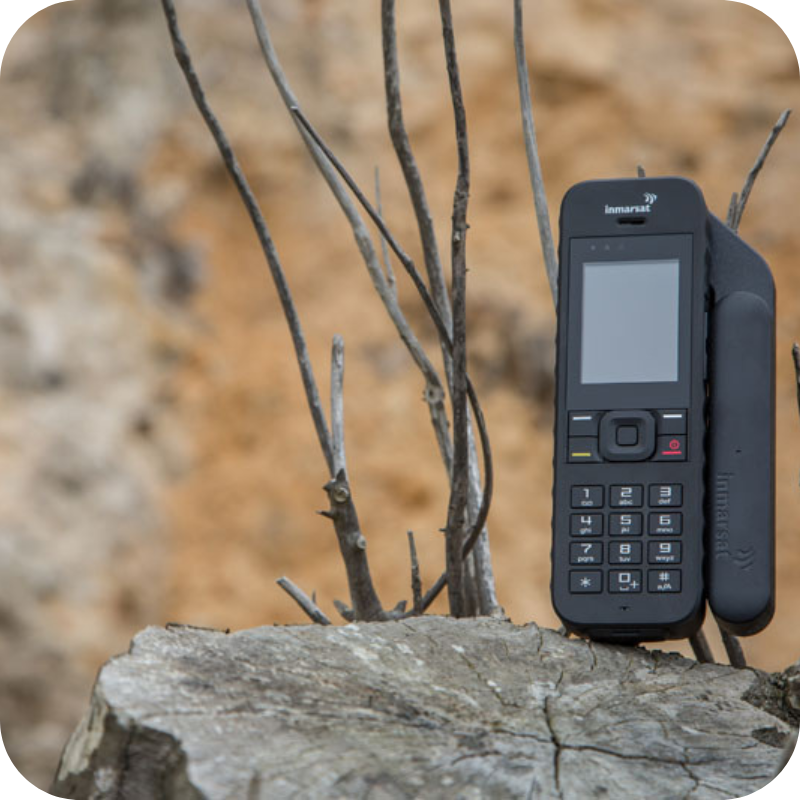
Coverage and network
Near-global reach backed by resilient infrastructure
Inmarsat’s services are built around a long-established global mobility footprint, with L-band and Ka-band capability used across different service types. Viasat describes Global Xpress as a unified global mobile broadband network, while also highlighting the role of L-band for resilience and safety-oriented connectivity.
In practice, that makes Inmarsat highly relevant for organisations that need strong international coverage and dependable managed satellite services across maritime, aviation, and remote land operations, while recognising that coverage language is best described as near-global rather than universal for every service type.
Inmarsat Hardware

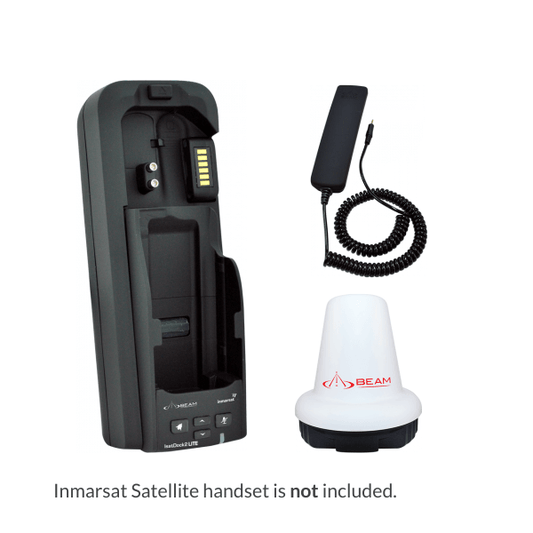
Beam IsatDock 2 Lite Bundle with Active Antenna (ISDLPHAA2) for Inmarsat IsatPhone 2
£1,626.00 (Inc. VAT)
£1,355.00 (Ex. VAT)
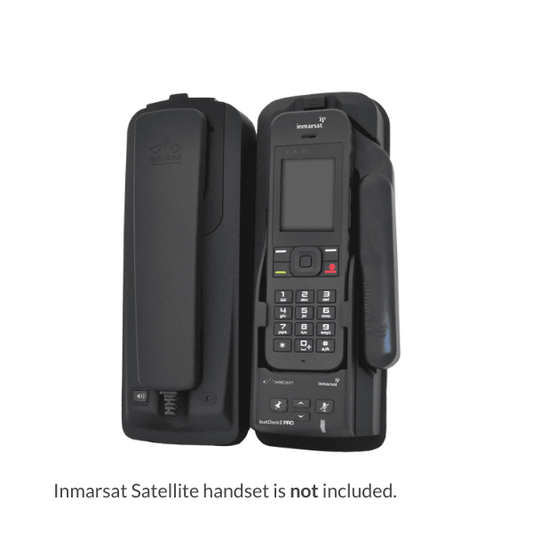
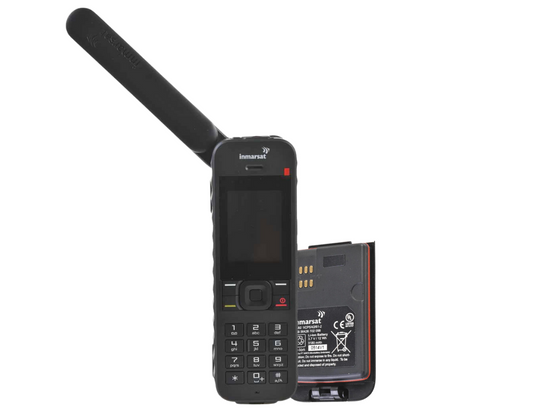
Certified Used - Inmarsat IsatPhone 2 Satellite Phone - Grade B

£553.48£539.64 (Inc. VAT)
£461.23£449.70 (Ex. VAT)


Next step
Explore Inmarsat solutions with GTC
Speak with our team about Inmarsat broadband, GSPS, BGAN, maritime safety services, and the right setup for remote operations, mobility, and mission-critical connectivity.